Introduction
Sciatica is a very common cause of pain down the back of the leg into the buttock, thigh, calf or foot. It happens when the sciatic nerve—the largest nerve in the human body is compressed or irritated.
Many people consider sciatica to be a disease; however, it is a symptom of a problematic nerve or spine condition. By understanding the causes of sciatica and identifying the risk factors, you can help avoid any potential future complications and get treatment sooner.
Lahore Spine Care offers evidence-based physiotherapy and non-surgical rehabilitation treatments to restore mobility, alleviate pain and help patients recover from sciatica.
What Is Sciatica?
The sciatic nerve runs through the buttocks and down the back of each leg to the feet and begins in the lower back (lumbar spine).
If this nerve is compressed or inflamed, it can lead to:
- Sharp or burning pain
Tingling sensation
Numbness
Muscle weakness
Back pain spreading down the back of the thigh and shin bones- Sciatica usually affects one side of the body.
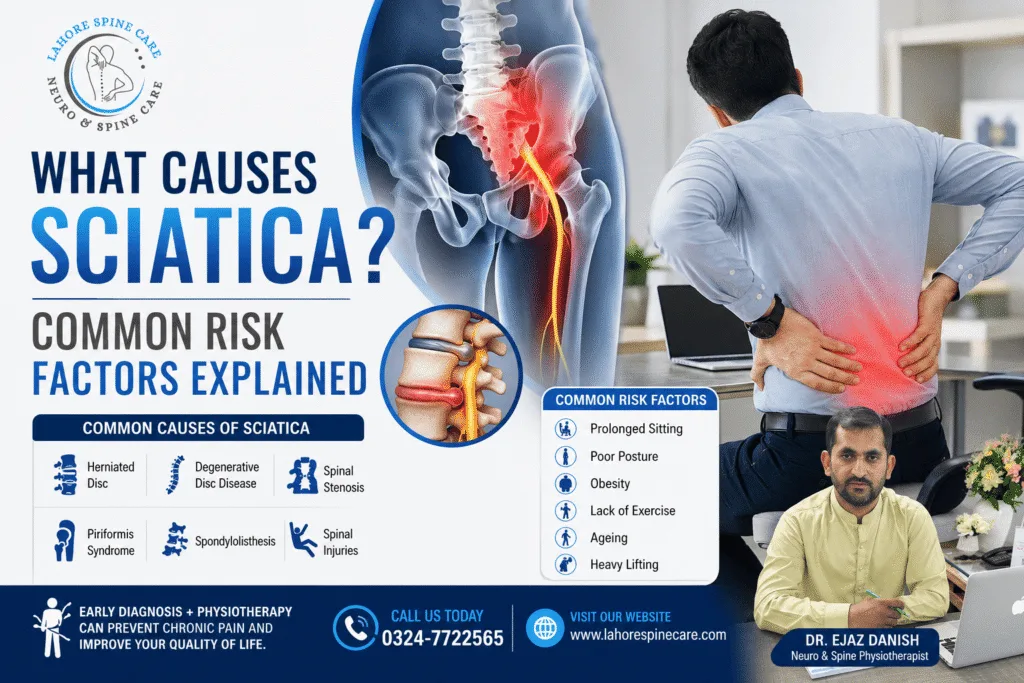
Common Causes of Sciatica
- Herniated (Slipped) Disc
The most common cause of sciatica is a herniated disc.
The soft inside part of a disc in the lower back bulges out and inflames the nerve root of the sciatica nerve.
Common symptoms include:
Lower back pain
This pain runs down one leg.
Numbness
Weakness
- Degenerative Disc Disease
As disc content dries and becomes less flexible, the discs in the spine age over time.
These change with age will decrease the space in between vertebrae, which can make it more difficult to avoid irritation to the nerves and the development of sciatica.
- Spinal Stenosis
When the spinal canal narrows it is called spinal stenosis.
This constriction can squeeze nerves, particularly in people who are older, causing:
A problem occurs with the legs that makes it difficult to walk.
Tingling
Weakness
Avoid standing for extended periods of time
- Piriformis Syndrome
The piriformis muscle is deep in the buttock close to the sciatic nerve.
If this muscle tightens or inflames, it can squeeze the sciatic nerve, which can cause pain similar to sciatica.
- Spondylolisthesis
It is a condition where one bone (or vertebra) slides forward over the other.
If the vertebra becomes displaced, it can press on adjacent nerve roots, causing pain in the back of the leg (sciatica) and impairing movement.
- Spinal Injuries
The structures of the spine can become damaged and the sciatic nerve can become irritated in the event of a fall or sporting injury, lifting accident, or road traffic accident.
Early evaluation and treatment is crucial to avoid chronic pain.
- Tumours or infections (rare)
In extremely rare instances, a tumour, infection or cyst in the spine may press down on the sciatic nerve.
The following are common risk factors for Sciatica:
Other lifestyle habits can heighten the risk of sciatica even if you don’t have a spine problem.
Age
Those ages 30 to 60 are at the highest risk of developing problems in the discs that may contribute to sciatica.
Poor Posture
Slouching over puts constant strain on the spine of the lower back.
The more forward head posture, slouching and unsupported sitting, the greater the pressure on the discs.
Prolonged Sitting
Many people spend many hours sitting, whether in the office, in school, in their cars, or at home.
Sitting, especially for long periods, can cause the core muscles to become weak, placing stress on the lower back.
Obesity
Too much weight puts excessive strain on the back.
Stability of weight decreases the pressure on spinal discs and joints.
Physically Demanding Jobs
Jobs involving:
- Heavy lifting
Repetitive bending
Frequent twisting
Manual labor - increase the risk of disc injuries and sciatica.
Diabetes
Diabetes can cause progressive peripheral nerve damage, elevating the risk of neuropathic pain and impaired wound healing.
Lack of Exercise
Abdominal and back muscles are weak, giving less support to the spine.
Regular exercise helps stabilize the spine and minimises risk of injury.
The symptoms that you should never ignore are those that occur is early warning.
Contact the professional if you have:
Linguistic pain, which is felt below the knee.
Low back pain that does not go away.
A leg that “goes to sleep” or “pins and needles” making it numb or tingle.
Muscle weakness
Difficulty walking
Increased pain when sitting up
Treating early may result in a quicker recovery.
Is it possible to prevent Sciatica?
In many cases, yes.
You can cut your risk down a lot if you have healthy daily habits.
Prevention Tips
✔ Maintain proper posture
✔ Exercise regularly
Strengthen core muscles: Work on your core muscles.
✔ Stretch daily
✔ Avoid prolonged sitting
✔ Lift objects correctly
✔ Maintain a healthy weight
✔ Stay physically active
✔ Use ergonomic office furniture
If symptoms are present, find treatment early on.
Physiotherapy can help alleviate sciatica.Physiotherapy is useful for the treatment of sciatica.
Physiotherapy is one of the best non-surgical treatments for sciatica.
Treatment may include:
Comprehensive assessment
Pain management techniques
Manual therapy
Core strengthening exercises
Nerve mobilization
Posture correction
Spine mobility exercises
Ergonomic advice
A home exercise program tailored to your needs.
The majority of patients respond very well to progressive rehabilitation and lifestyle changes.
So, why Lahore Spine care?
Our physiotherapists at Lahore Spine Care are highly experienced in making personalized treatment plans to treat the cause of Sciatica and not just the symptoms.
We focus on:
Evidence-based physiotherapy
Non-surgical spine rehabilitation
Personalized exercise programs
Spine Fitness training
Posture correction
Long-term prevention strategies
Our aim is to restore you to an active and pain free lifestyle, regardless of what may have caused your sciatica and whether that is due to a herniated disc, poor posture or prolonged sitting.
Conclusion
Sciatica is a frequent condition that may impact working, moving and life. Knowing the common causes of back pain and risk factors (herniated discs, poor posture, obesity, sitting for long periods, spinal degeneration) will help you take preventive measures before back pain becomes a serious problem.
Early physiotherapy for persistent low back pain, leg pain, numbness or tingling will help you recover better and decrease the need for more invasive treatments.
Be aware of signs of trouble. The sooner, the better in the case of early intervention.
Book your consultation / appointment today.
Lahore Spine Care – Spine Fitness
📍 14-D1, Ghalib Road, Gulberg III, Lahore
📞 0324-7722565
🌐 www.lahorespinecare.com