








✅ “Essential Tips for Maintaining Spine Health During Ramadan Fasting”
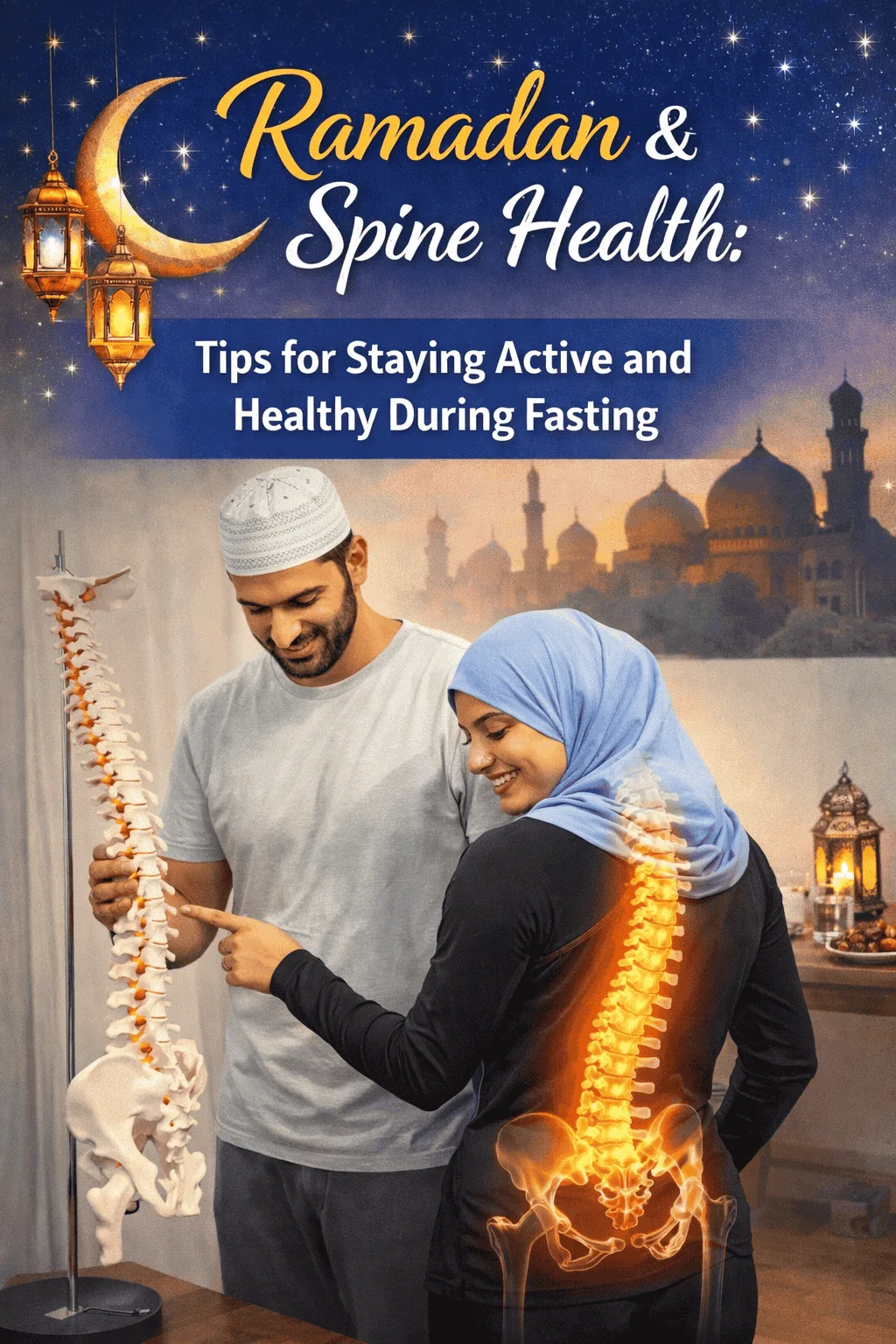
Ramadan is a blessed month of spiritual thought, discipline and fasting. Nevertheless, dietary habits, sleep, hydration, and exercise will have an impact on your spine, particularly when you already have back pain, neck pain, or problems with posture. Maintaining Spine Health During Ramadan Fasting spine ensures you stay energetic and pain-free during Ramadan.
The following are important precautions to save your spine when you are fasting.
- Always remember to sit straight when performing your activities.
- One of the causes of back and neck pain is poor posture.
Why Spine Health Is Important During Ramadan
Your spine is what is giving your body stability, posture and movement. When a person fasts, the body is subjected to various alterations which may influence the well-being of the spinal health, which includes bad impacts such as…
- Poor hydration is detrimental to the health of the spinal disc.
- Changes in sleep patterns
- Reduced physical activity.
- Sedentary lifestyle.
- Stiffness of muscle as a result of inactivity.
- Spinal strength and flexibility can be preserved by taking preventive measures.
- Sit Up Strauss With the Day.
- Bad posture places more stress on the muscles of the spine, on the ligaments and discs.
Important posture tips for spine health during Ramadan:
- Do not sit in a bending position.
- Do not slouch when praying, working or using the phone.
- Sit on a coccyx care cushion to support your lower back in case of prolonged sitting.
- Make screens at eye level so as not to strain the neck.
- Fraudulent positions during prostration should be avoided.
- Proper posture decreases the spinal disc and muscle pressure.
- Keep Yourself Hydrated during Iftar and Suhoor.
- The dehydration may decrease the hydration of the spinal discs, causing stiffness and pains.
Hydration tips for Spine Health During Ramadan:
- Take 8-10 glasses of water between Suhoor and Iftar.
- Caffeine (tea, coffee, soft drinks) should be avoided or minimized.
- Add foods that are hydrating (fruits and vegetables).
- Consume water slowly rather than taking it in large quantities at a time.
- The spinal discs should be hydrated to absorb shock and be flexible, which constitutes a healthy spinal disc.
- Ramadan: A lot of individuals tend to be less active in the period of Ramadan, and this may lead to weak muscles in the spine.
What you should do:
- Have little walking breaks after every 30-45 minutes.
- Spending long hours in the same position is to be avoided.
- Perform light stretching exercises.
- Stay moderately active.
- Exercise increases blood flow and eliminates rigidity.
- Do soft stretching exercises for your spine.
- Light exercises assist in keeping the body flexible and making the muscles less tight.
Recommended exercises for spine health during Ramadan:
- Neck stretches
- Shoulder rolls
- Back extension exercises
- Hamstring stretches
- Gentle core strengthening
- Best times to exercise:
After Iftar (ideal)
- Prior to Suhoor (do gentle stretching)
- In the event that you feel weak, do not overdo exercise during fasting.
- Sleeping in a comfortable position.
- Sleep is vital in the recovery of the spine.
Best sleeping tips:
- Use a firm and healthy mattress to sleep on.
- Avoid very soft mattresses.
- Sleep on your back or side.
- Have a pillow which contours the natural curve of your neck.
- Do not sleep on your stomach.
- A sleep position is a positioning that lessens the spinal stress.
Safe lifting tips for spine health during Ramadan:
- Bend your knees, not your back.
- Keep things near to your body.
- Avoid Heavy Lifting
- Avoid Heavy Lifting
- Lifting in bad positions may result in injury to the disc and muscle tension.
- This is to be avoided by sudden twisting.
- Request assistance in case it is a heavy object.
Healthy Diet to Keep Your Spine Healthy.
Diet is significant to the spinal wellbeing and spine health during Ramadan.
Include:
- yoghurt). Foods with a high content of calcium (milk, yoghurt).
- Protein for muscle strength
- Fruits and vegetables
- Vitamin D sources
- Nuts and healthy foods
- Excessive oily and processed foods should be avoided.
- The pages are careful with long supplications (Taraweeh).
- Being on the feet might lead to back pains.
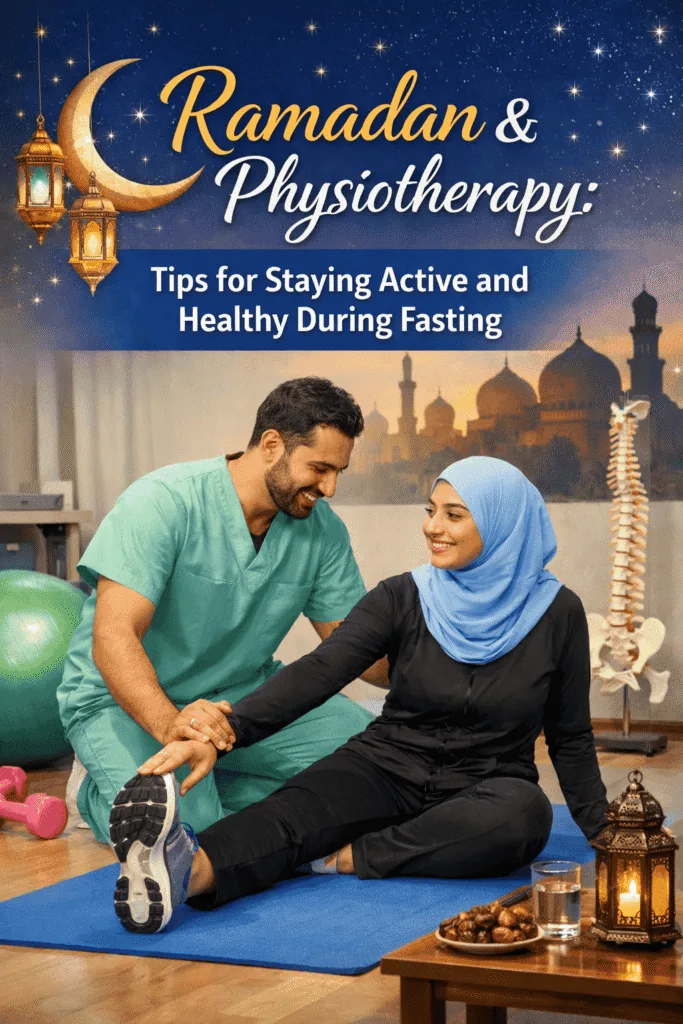
Most Helpful Tips for Spine Health During Ramadan :
- Wear comfortable footwear.
- Maintain upright posture.
Light stretching is helpful in.
- Sit and rest if you feel pain.
- Stop Overindulging in Cellphone and Display Time.
- Bad mobile posture leads to text neck.
Prevention Tips for Spine Health During Ramadan:
- Hold the smartphone at eye level.
- You should not make your neck bend down very long.
- Take breaks regularly.
- A physiotherapist should be consulted in case of pain.
- Neglect not to pay attention to persistent back or neck pain.
Spine Physiotherapy can help with:
- Pain relief
- Posture correction
- Muscle strengthening
- Spine rehabilitation
- Prevention of future injury
- The early treatment avoids complications.
Conclusion
The well-being of the spine is also important during Ramadan so that the spine is comfortable, mobile, and at ease. Back and neck aches during fasting can be avoided by remaining hydrated, keeping a good posture, exercising and engaging in healthy habits.
In case of continuous spine pain, physiotherapy conducted by a doctor will enable you to heal safely and efficiently.
About Lahore Spine Care
Lahore Spine Care is a specialist in physiotherapy and spine rehabilitation of back trauma, neck trauma, disc trauma, posture therapy and musculoskeletal disorders. We want to make you stay healthy, active and pain-free.