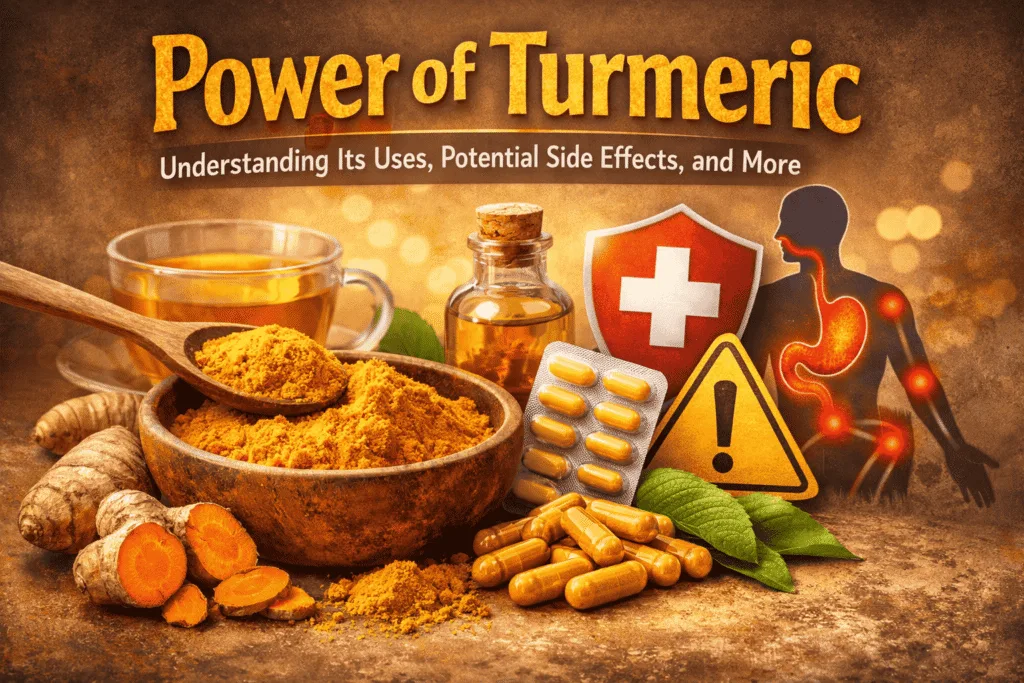
Turmeric, also known as the “golden spice”, has been a part of traditional medicine and food culture for thousands of years. Since South Asian kitchens adopted the contemporary wellness practices, turmeric has gained world recognition regarding its effective health promotion aspects. We will discuss its advantages and purposes and possible side effects, as well as tips to use it safely.
What Is Turmeric?
A vivid yellow-orange spice that is obtained as a result of the Curcuma longa plant root. Curcumin is the active compound of it, and most of its medicinal properties are attributed to it. Turmeric has been recognized as an anti-inflammatory, antioxidant and antimicrobial agent and therefore is a natural health powerhouse.
Health Benefits:
Natural anti-inflammatory effects.
Some of the conditions associated with chronic inflammation include heart disease, arthritis, and metabolic disorders. Curcumin is beneficial in lowering the inflammation by inhibiting the inflammatory pathways in the body.
Antioxidant Support
It counteracts the bad free radicals and enhances the antioxidant systems that are already in the body, promoting the wellbeing of the cells and delaying oxidative stress.
Joint and muscle health.
Turmeric is also popular for treating joint pain and stiffness, especially in arthritis and muscle pain following sports.
Aids Digestive Health
Turmeric has been used to relieve indigestion, bloating and gas by activating the production of bile and enhancing gut activity.
Boosts Immunity
Turmeric has antimicrobial and immune-modulating effects, and as such, it boosts the immunity of the body.
Benefits for Brain and Heart.
New studies indicate that curcumin can help in the health of the brain, including increasing Brain-Derived Neurotrophic Factor (BDNF), and improve cardiovascular health by improving blood vessel functioning.
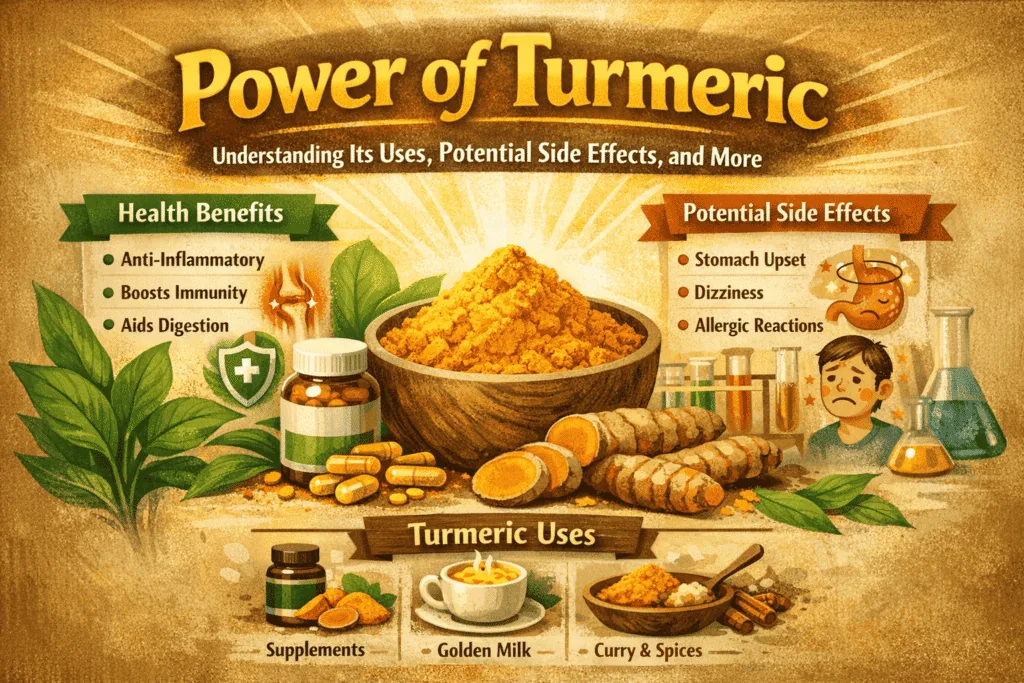
Common Uses:
- Radioactive Use: It is used in curries, soups, rice and teas.
- Golden Milk: As a wellness beverage, it is a mix of spices, milk and turmeric.
- Dietary Supplements: Powders and extracts to get a concentrated advantage.
- Skincare: It has antibacterial and anti-inflammatory properties.
- Traditional Medicine: Ayurvedic: The Ayurvedic school of medicine is commonly used. Unani: The Unani school of medicine is also commonly used.
Side Effects and Contraindications.
Although turmeric is generally safe, particularly in moderated doses, large amounts of the substance, particularly in supplemental form, have side effects:
- Nausea, vomiting, bloating and diarrhoea.
- Higher chances of bleeding, particularly among individuals using blood thinners.
- For the problems of the gallbladder, turmeric can provoke the bile release.
- Interaction with drugs such as anticoagulants and diabetes drugs.
- A healthcare professional must consult pregnant women or those who are breastfeeding and persons with medical conditions before taking turmeric supplements.
Best safety tips:
- Add black pepper: Black pepper (piperine) makes up to 2000 per cent of curcumin absorption.
- Eat good fats: Curcumin dissolves in fat, and thus it should be taken with oils or milk.
- Take prescribed amounts: This is particularly in cases of supplements.
- Select quality products: Find standardized content of curcumin and third-party testing.
Final Thoughts
Turmeric is not only a spice but also a long-history natural cure that has increased scientific adherence. It can be a good supplement to your health and nutrition when taken prudently. A balanced and informed use is, however, important, like any other powerful natural substance.
You can include it in your meals or use it as the supplement, but turmeric really is regarded as the golden healer of nature.